High Streets UK met in Bristol this week to call on Government to make the Visitor Levy simpler for operators, or risk damaging the growth of flagship cities
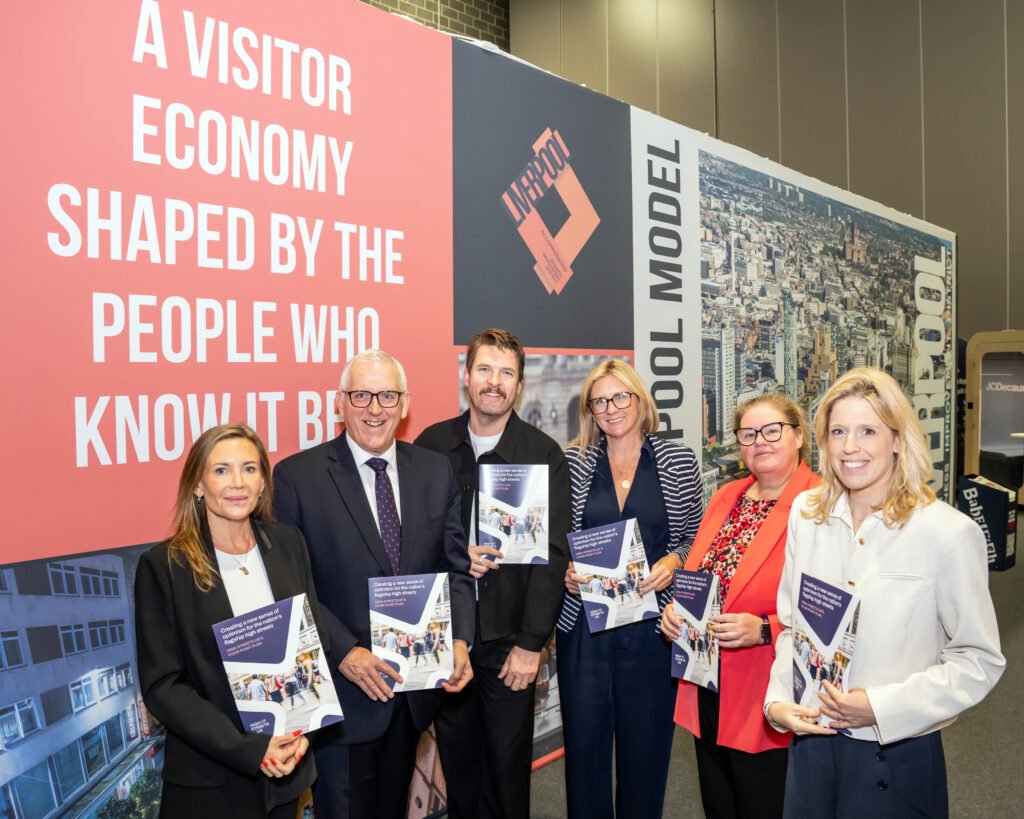
25th NOVEMBER – Members of High Streets UK convened in Bristol this week to discuss the implications that the Visitor Levy (England) Bill will have on the UK’s flagship destinations. Representing over 5,000 businesses across England, Scotland and Wales, High Streets UK is a pro-growth, nationwide partnership of business representatives which aims to tackle the most pressing issues facing the UK’s flagship high streets and unlock growth.
High Streets UK members from across the country agreed that the Overnight Visitor Levy as currently designed will be damaging to flagship destinations. The draft legislation does not allow for Visitor Levies to be introduced as an easy-to-administer flat rate, unlike successful levies in Paris, Barcelona, and Rome. Mayors will instead have to introduce a percentage-based model: hoteliers warn this will place a significant administrative burden on their operations and would become prohibitively expensive at scale.
Members also stressed that the Overnight Visitor Levy should not be considered in isolation from the incentives offered by competing international destinations which have a similar levy. The UK must take a joined-up approach, balancing any additional costs with policies that attract visitors, encourage spending and support growth.
High Streets UK members convening for its Strategic Forum heard from its member Essential Edinburgh, where a 5% visitor levy was introduced in July. By August, hotels were reporting real problems to the Scottish Tourism Alliance (STA): some booking platforms could not calculate the percentage correctly; extras like breakfast had to be stripped out of each bill. Staff were correcting bills by hand taking around eight minutes for each, and the STA warns the total cost could run into millions.
Modelling produced by Oxford Economics sets out the risk to the visitor economy posed by a 5% percentage charge, the ceiling committed to by ten regional mayors in September:
- A 5% charge is expected to lead to an 11.9 million drop-off in nights in paid accommodation across the UK, and an overall fall in tourism spending of £1.8bn.
- Oxford Economics’ modelling shows that the visitor drop-off will be more pronounced in Bristol, at -3.1%, than almost any other UK city.
- London, meanwhile, would become the second-most-taxed visitor destination in the world under a 5% rate, behind Amsterdam, posing a real risk to the future appeal of London as a destination of choice for conventions.
In Liverpool, meanwhile, a simple £2 per room per night flat rate since 2023 has supported events generating more than £86 million for Liverpool’s economy, with a further events pipeline worth £132 million. Under the Accommodation BID model, hoteliers decide what levy receipts are spent on, and that they are ringfenced for the benefit of the tourist economy.
Also attending the Forum to discuss the Overnight Visitor Levy were local leaders Councillor Andrew Brown, Chair of the Economy and Skills Committee at Bristol City Council, and Jeanette Bain-Burnett, Head of Partnership Development at the West of England Combined Authority. The group were also joined by Douglas Ure (Chief Executive, Business West) Alex Hearn (Director of Place, Bristol City Council), Alison Mansfield (General Manager, Clayton Hotel), and Mehmet Kandemir (General Manager, Leonardo Royal) for an evening reception.
Speaking in Bristol today, Deputy Chair of High Streets UK and Chief Executive of Liverpool BID Company Bill Addy said:
‘The Overnight Visitor Levy is coming, and the question now is how we make it work. We’re calling on Ministers to reconsider, and amend the draft legislation to encourage mayors to introduce a tiered flat rate levy. Liverpool shows what is possible with even a small levy of £2 per room per night: targeted investment supporting events worth more than £86 million to the local economy through our Accommodation BID – around £41 back to the visitor economy for every £1 put in.’
Councillor Andrew Brown, Chair of the Economy and Skills Committee at Bristol City Council, said:
‘It was a pleasure to welcome High Streets UK to Bristol. Our city centre is one of the region’s great economic assets, and the visitor economy is central to its success. A well-designed Overnight Visitor Levy could give cities like ours a new way to invest in the places visitors come to see. But it has to be simple for operators to collect and work for our hotels and hospitality businesses, not against them. Getting the design right now will decide whether the levy supports growth or holds it back.’
Vicky Lee, Director of Place at Bristol BID, said:
‘With the Overnight Visitor Levy now before Parliament, it’s vital that Bristol’s business community has an opportunity to influence how it is shaped and delivered.
‘Introduced in the right way, the levy could present a real opportunity to strengthen Bristol’s visitor economy, attract more people to the city and support growth across our hospitality, leisure and retail sectors. However, businesses must be active partners in that process, with a meaningful say in how the revenue generated is reinvested. Through High Streets UK, we’re ensuring that the needs and ambitions of Bristol’s businesses form part of this important national conversation.’
Mehmet Kandemir, General Manager of the Leonardo Royal Hotel Bristol, said:
‘Greater investment in Bristol as a visitor destination has the potential to bring significant benefits to the hotel sector. A thriving city with a strong cultural and events offering is good for our guests, our businesses and the wider local economy.
‘What’s important is that any levy is straightforward to administer, transparent in how the funds are invested and does not place an unfair financial or administrative burden on hotels, particularly at a time when operating costs remain high. Hotels will be on the front line of delivering this levy, so it’s essential that we have a meaningful voice in how it operates and can see tangible benefits from the investment it generates.’
Douglas Ure, Chief Executive of Business West, said:
‘Having the chance to speak with representatives of flagship high streets across the country, there are many asks that they share with West of England businesses. We all recognise that it is crucial for the Overnight Visitor Levy to be co-designed with business to have a localised focus. It must be simple in operation and be ring-fenced for the places that raise it, so we can back growth for the nation from every region’s high streets.’
Alongside a proportionate Overnight Visitor Levy, HSUK’s four-point plan, launched at Labour Party Conference in September, calls for:
- Business rates reform: a progressive system that rewards investment and supports the anchor stores which drive footfall to flagship high streets.
- Stronger visible policing: police forces, guided by the Home Office, working with high street businesses and their BIDs to tackle the organised crime and anti-social behaviour that undermine confidence in city centres.
- Tax-free shopping: the return of tax-free shopping for international visitors, or an equivalent that makes the UK’s flagship high streets more internationally competitive.